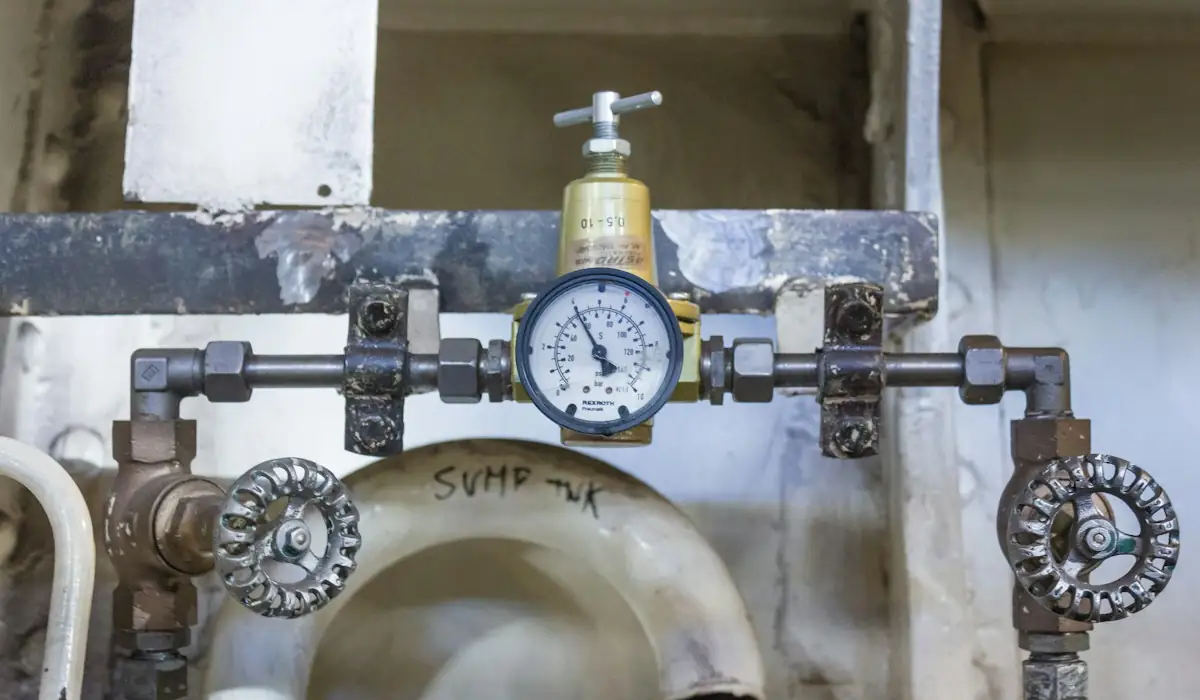
How backflow happens
Water normally flows from the city main into your house. If pressure in the main drops, when a crew opens hydrants or a main breaks down the block, water inside your pipes can be pulled backward. Anything connected at that moment can come with it: fertiliser from a hose-end sprayer, treated water from a boiler, standing water from irrigation lines in the lawn.
Common cross-connections in a house
- A garden hose sitting in a pool, rain barrel or bucket of cleaning solution.
- Lawn irrigation systems tied into the main line.
- Hydronic heating boilers fed from domestic water.
- Utility sinks with a hose dropped below the flood rim.
Devices we install
- Hose bibb vacuum breakers that thread onto outside taps.
- Dual check valves on boiler feeds and some appliance lines.
- Testable assemblies, such as double check or reduced-pressure types, where the hazard or a municipal program requires them.
For many commercial and industrial sites, the Region of Peel enforces a cross-connection program, with testing by certified testers. Requirements for houses differ; check the current rules for your property type with us or the Region before you plan an irrigation tie-in.
After installation
Testable devices are tagged with the install date and the test result. Non-testable valves are noted on your file with a suggested check interval. We also check that a device has drainage space below it, because some types discharge water by design when they trip.
Signs you need this job
- Pump motor humming while the pit level never drops
- The float sticking against the liner
- Floor-drain puddles showing up after every downpour
- A discharge line frozen at the exit
On the job, in order
- Pull the plug on the old pump and bail the crock dry
- Swap the pump and check valve on new unions
- Seal the discharge through the wall
- Flood the crock again and see the float switch kick in
Ready when you are. One call, a real plumber, an arrival window.
Call now(365) 517-6415